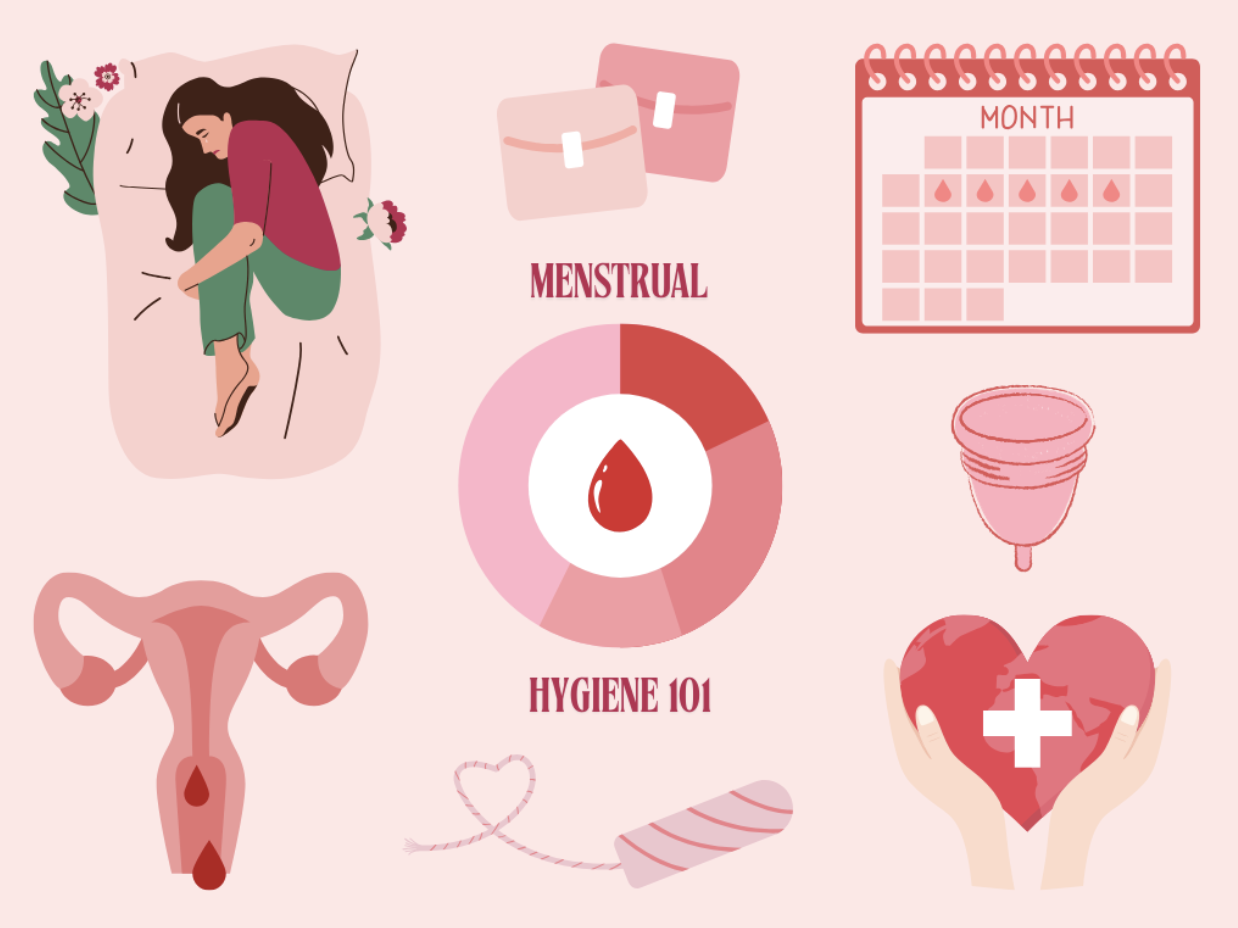
Menstrual Health 101
Menstruation is something that nearly half the population experiences, but it often feels confusing and barely talked about because of the stigma surrounding the topic in our society. Many people get their first period without really knowing what's happening or how to manage it, and schools usually cover the basics about menstruation but not much more. So, this article explains the essentials: what a period is, what to expect, and how to take care of yourself when you're on it.
What Is a Period?
A period is when the body sheds the lining of the uterus because an egg was not fertilized. The uterine lining (aka the endometrial lining) is produced to prepare the female body for pregnancy, and is therefore shed when pregnancy is not happening. This is part of the menstrual cycle, which usually lasts around 28 days but can range from 21 to 35.
The following is a brief breakdown of the stages of a menstrual cycle:
- Menstruation (~days 1-5): The uterus lining sheds (bleeding).
- Follicular phase (~days 6-14): An egg starts maturing. Uterine lining begins to regrow. Estrogen and FSH levels are rising.
- Ovulation (~days 15-19): The matured egg is released and is viable for fertilization for around 12-24 hours. LH and estrogen levels surge.
- Luteal phase (~days 20-28): Estrogen and progesterone levels rise. If the egg is fertilized, it travels to the uterus to be implanted for pregnancy. If not, it dissolves and the cycle starts again.
However, remember, everyone's cycle is different, especially during the first few years, so these days and lengths vary heavily from person to person.
Common Symptoms
Some people barely notice their period, while others deal with cramps, bloating, mood swings, fatigue, or breakouts. These symptoms are caused by changing hormone levels during the cycle. Also, different people experience different intensities of these symptoms. There are many tips online about what helps with period cramps, ranging from using a hot water bottle to simply taking pain medication, but ultimately different things will work for different people, and it is often worth experimenting with different methods to find what works best.
Period Products
There are lots of options for period products on the market, and some of them are the following:
- Pads: Stick to underwear. Easy to use. Have to change periodically.
- Tampons: Go inside the body. Also have to change every 4 to 8 hours to avoid Toxic Shock Syndrome (TSS).
- Menstrual cups: Reusable, eco-friendly, collect blood.
- Period underwear: Absorbent and washable.
- Discs/sponges: Less common but still used.
Trying a few different products often helps figure out what works best for an individual, and a lot of people use different products at different points in their cycle or variations of the same product (i.e. different pad thicknesses, etc…).
Tracking Periods
Tracking helps predict when a period is coming and identify patterns. Apps like Flo or Clue are great, but a notes app or journal works too.
When to Talk to a Doctor
It is often recommended to check in with a doctor if:
- Bleeding is very heavy.
- Periods last more than 7 days.
- Pain doesn't get better with meds.
- Periods stop without a clear reason.
- Periods are excessively irregular or break a pattern.
These symptoms could be signs of conditions like PCOS or endometriosis, so it's best to get it checked out sooner rather than later to avoid possible future complications.
Why This Matters
Understanding periods helps break the stigma. Menstrual health affects physical, mental, and emotional well-being. It's not just a "women's issue"—trans and nonbinary people get periods, too. And we are never going to be able to abolish menstrual stigma in society if even people who do not directly experience them refuse to contribute to the cause. Everyone deserves access to information and menstrual products, and a topic that affects around half of the population should be common knowledge, which is why it is important to increase menstrual health literacy.