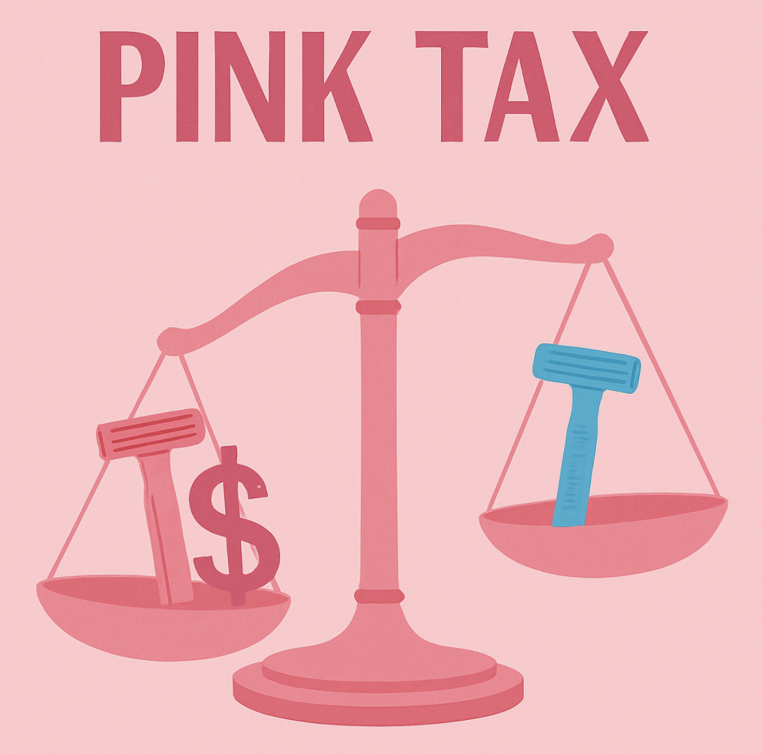
Pink Tax
Have you ever noticed that some products when marketed toward women (like razors, shampoo, or deodorant) are often more expensive than nearly identical products for men? If so, you've probably encountered the pink tax. The pink tax isn't an actual government tax. Instead, it refers to the extra amount that women and AFAB people often pay for products and services simply because they are marketed as "feminine." This subtle but widespread pricing disparity is one of many ways that gender-based inequality shows up in everyday life. So, let's learn more about this phenomenon that is affecting so many of us.
What Is the Pink Tax?
The pink tax is the name given to the upcharge on products and services marketed toward women. Even when the only difference is packaging or color, the "female" version of an item often costs more. For example, a razor that is pink may cost more than the same razor that is blue instead. This price difference shows up in all sorts of industries, and it adds up over a lifetime, in addition to simply being morally unjust.
According to a 2015 report by the New York City Department of Consumer and Worker Protection, women's products cost an average of 7% more than similar products for men. The report analyzed nearly 800 products across five industries and found that women paid:
- 13% more for personal care products
- 8% more for clothing (adult)
- 7% more for toys/accessories
While that data is from a few years ago, newer studies and reports confirm that the pink tax still exists today.
Examples of the Pink Tax
- Razors: A pack of pink razors may cost more than the exact same razors in blue packaging.
- Dry Cleaning: Women's shirts often cost more to dry clean than men's shirts, even if they're similar in material and style.
- Haircuts: Salons may charge higher prices for women's cuts, even when the service time and style are the same.
- Children's Toys: A pink scooter marketed to girls might be priced higher than a neutral or blue version.
These price differences can also apply to everyday necessities, which means people who menstruate or identify as women end up paying more just to meet basic hygiene or presentation standards.
Tampon Tax vs. Pink Tax
It's important to note that the pink tax is not the same as the tampon tax, though they are related. The tampon tax refers to sales tax applied to menstrual products in states where they're not considered essential items. As of 2025, a handful of U.S. states still tax menstrual products, while others have passed laws to exempt them.
The pink tax, on the other hand, is not about a sales tax. It is instead about pricing decisions made by companies and service providers. But both contribute to gender-based economic inequality.
Why This Matters
Estimates suggest that the pink tax could cost women over $1,300 more per year. Over a lifetime, that could total tens of thousands of dollars in extra spending, just for choosing products designed for and marketed to them.
The pink tax reinforces harmful gender norms and contributes to financial inequality. Combined with the gender wage gap and other forms of discrimination, it creates real economic consequences for women and other marginalized groups who are affected.
Being aware of these price differences is a small but important step toward change. Some states (like California and New York) have passed laws banning gender-based pricing discrimination, and public pressure has led some brands to revise their pricing models, but there's still a long way to go.
What You Can Do
- Support change: Buy from companies that offer gender-neutral pricing or call out unfair practices.
- Raise awareness: Talk about the pink tax with friends or on social media.
- Advocate: Support legislation that aims to ban gender-based price discrimination.
When products that are functionally the same are priced differently because of gendered marketing, it's a social issue. Understanding and challenging the pink tax is one small but powerful way to fight for gender equity.