What is Period Poverty?
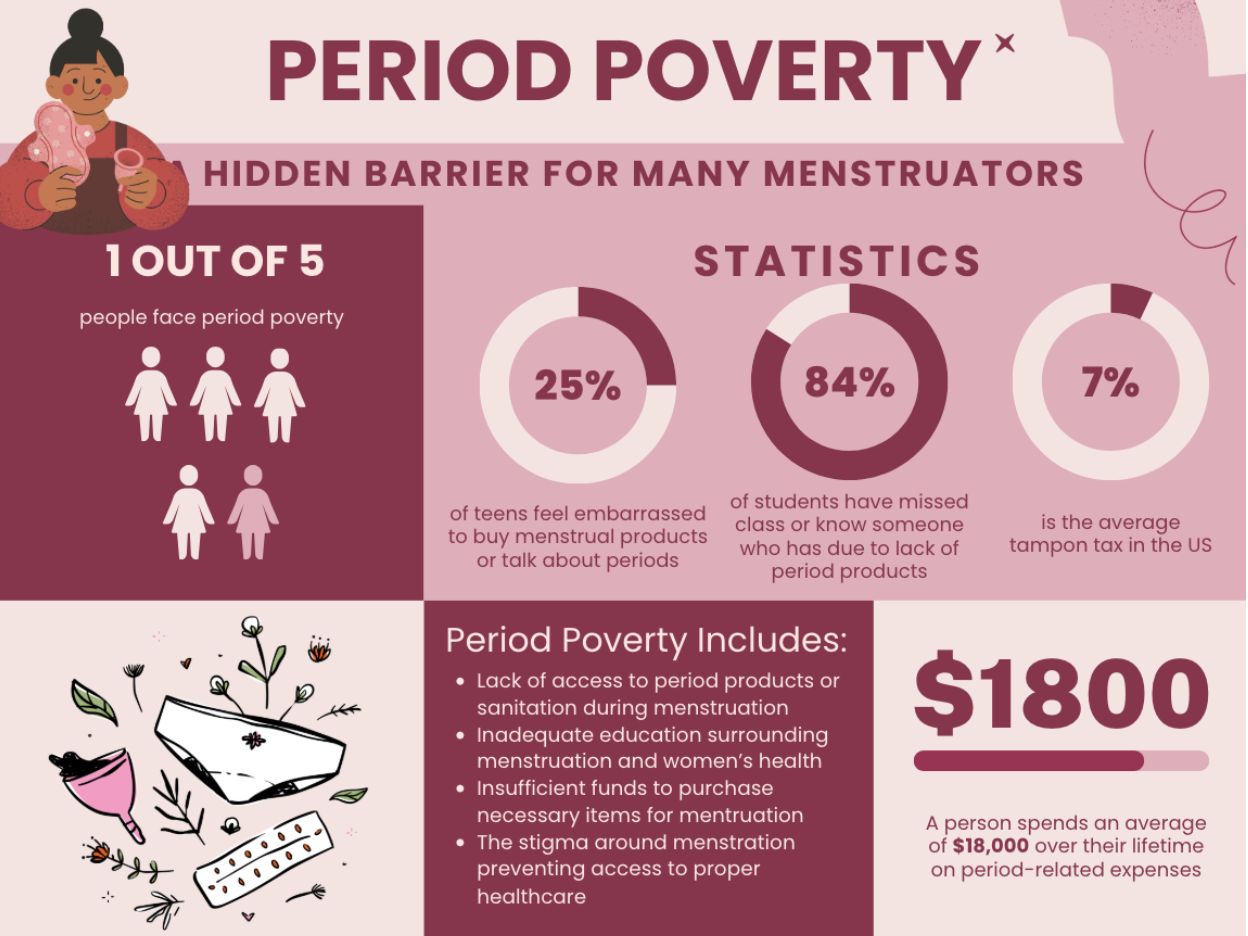
About 50% of the world's population menstruates at some point in their lives, and even if you don't menstruate yourself, you probably know someone who does. For many people, periods can be a difficult time with physical and emotional challenges such as cramps, headaches, fatigue, and mood swings. Unfortunately, for many people these struggles are made worse by something preventable: period poverty. Each month, about 1 in 5 people face period poverty, and nearly 60% will experience it at some point in their lives. Period poverty can affect people's mental health and add shame and financial stress to an already difficult time.
Period poverty, which is a problem prevalent all over the world, is when those who have a menstrual cycle are unable to access the items they need while on their periods, whether this is due to financial hardship or the unavailability of menstrual products.
What are the effects of period poverty?
Period poverty isn't just about not having pads or tampons; it affects people in so many different ways. Here are a few of those effects:
- Missed school or work: Without access to menstrual products, many people are forced to stay home during their periods, causing them to miss valuable days at school or work.
- Health risks from using unsafe alternatives: Period poverty can push people to use unhygienic alternatives like rags or newspaper, which increases the risk of infections and other serious health issues.
- Emotional distress and shame: The stigma around menstruation often leads to feelings of shame and isolation, making it even harder for people to seek help or talk openly about their needs.
- Disproportionate effects on low-income individuals, especially in BIPOC and LGBTQ+ communities: Marginalized communities face greater barriers to accessing menstrual care due to systemic inequalities, compounding the impact of period poverty on their overall health.
Global and Local Scope
Period poverty is a global issue that affects millions of people. In third-world countries, menstruators often don't have access to menstrual products and clean water, and they also have to combat the stigma around menstruation when trying to gain access to education or healthcare. In many places, this taboo surrounding periods forces menstruators to miss school or drop out entirely, and they can also get infections or face other problems due to inadequate care or hygiene during their period.
But this isn't just a problem "over there"; it's present here as well. In the Bay Area, many students, especially in underserved communities, regularly miss school because they can't afford basic menstrual supplies. Menstrual products can cost $10 to $15 a month per person, so in households with multiple menstruators, this cost can add up. Additionally, menstruators are often not able to ask for help due to the stigma surrounding menstruation. Even in one of the wealthiest regions in the world, period poverty continues to quietly impact education and health.
Why It's Not Just a "Women's Issue"
Period poverty doesn't just affect women, but it also has a large impact on trans and nonbinary people who menstruate. These individuals often face additional stigma, making it even harder for them to access the products and healthcare they need.
More importantly, period poverty affects whole communities. When people are forced to miss work or school, or struggle to function while in pain or unprepared, it affects their education, income, and overall well-being, which will also have an effect on the people around them. Furthermore, when people miss work or are not able to complete their responsibilities due to period poverty, this can also have an impact on their community.
What's Being Done and How You Can Help
Here in the Bay Area, Pads for Peers is making a local impact by providing free monthly menstrual kits to students in De Anza College, with a focus on confidentiality and personalization of your kit. We are working to expand our program to target middle schools and more community colleges.
Additionally, across the world, organizations like Period, The Pad Project, and Happy Period help distribute menstrual products and fight stigma through education and policy change.
You can help be part of the solution.
- Donate: Support local and national organizations working on menstrual equity.
- Advocate: Push for better access to free and good-quality products in schools, shelters, and public spaces.
- Talk about it: Normalize talking about periods and period poverty to reduce shame and stigma.
- Share resources: Post about initiatives in your area and uplift voices in your community.
Every small action adds up. Period poverty is preventable if we all work together to address it.